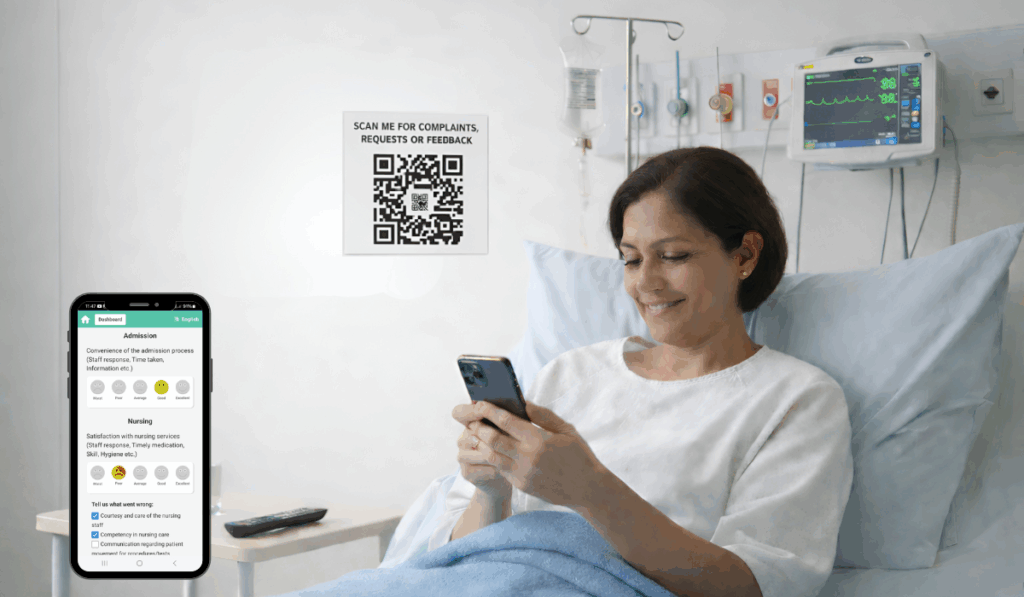

The shift from paper-based to digital patient feedback systems is one of the most significant transitions in modern healthcare management. But making the case for digital transformation requires more than intuition — it requires a clear-eyed comparison of what each approach delivers.
Traditional Paper-Based Feedback
How it works: Printed questionnaires distributed at discharge, collected in boxes, manually tallied by administrative staff.
Typical results:
- Response rates of 5–15% (only the most motivated patients respond)
- Analysis lag of days or weeks before data is actionable
- High administrative cost per response
- Limited to questions that fit on one page
- Illegible handwriting and incomplete forms reduce data quality
Digital Patient Feedback Systems
How it works: Surveys delivered via QR code, SMS, WhatsApp, email, kiosk, or bedside tablet — automatically collected, analysed, and reported in real time.
Typical results:
- Response rates of 35–60% — a dramatic improvement
- Real-time dashboards updated within minutes of response
- Negligible marginal cost per additional response
- Adaptive surveys that branch based on answers
- Structured data enabling trend analysis and department benchmarking
Side-by-Side Comparison
| Criterion | Paper-Based | Digital (e.g., Efeedor) |
|---|---|---|
| Response rate | 5–15% | 35–60% |
| Time to insight | Days–weeks | Real-time |
| Data quality | Variable (illegible) | Structured, consistent |
| Cost per response | High | Low |
| Department drill-down | Difficult | Instant |
| Complaint escalation | Manual | Automated alerts |
| Accreditation reporting | Manual compilation | One-click reports |
Real-World Example: Central Health Clinic
A mid-sized clinic with 200 beds switched from paper forms to Efeedor's digital system. Within 90 days:
- Monthly responses increased from 180 to over 700 (+289%)
- Management received actionable data weekly instead of monthly
- Three departments identified for immediate service improvement through trend analysis
- Patient satisfaction score (CSAT) improved from 3.6 to 4.2 in 6 months
Addressing Common Concerns
The Digital Divide
Not all patients are comfortable with technology. A thoughtful digital system addresses this through: QR codes (simple), kiosk tablets (staff-assisted), and SMS (familiar). Paper remains available for those who prefer it.
Data Privacy
Reputable digital feedback systems are designed for healthcare compliance — data encryption, role-based access, and audit trails ensure patient data is protected.
Conclusion
The evidence is clear: digital patient feedback systems deliver dramatically higher response rates, faster insights, and more actionable data than paper alternatives. For healthcare organisations committed to continuous quality improvement, the question is no longer whether to go digital — it's which digital solution to choose.